The Wellness Industrial Complex Sold You a Solo Journey — But You Were Never Meant to Heal Alone
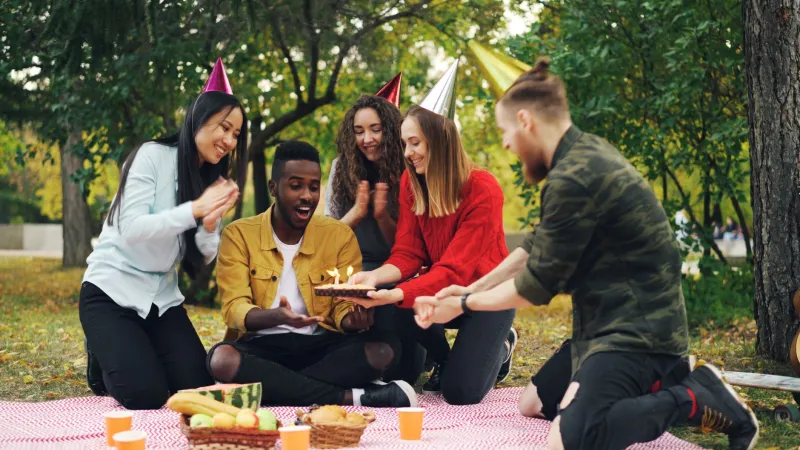
Picture the ideal wellness day as the internet describes it. You wake up before sunrise, drink a glass of water with minerals dissolved into it, meditate for twenty minutes, journal your intentions, hit a workout, prep a nourishing breakfast, and schedule a therapy session for later in the week. You are, by every measurable standard, taking care of yourself.
So why does it still feel like something is missing?
For a lot of people — especially those who've leaned hardest into self-improvement culture — that question doesn't have a clean answer. They've done the work. They've got the habits. They've probably got the apps to prove it. And yet there's a low-grade ache that no amount of breathwork seems to touch. Loneliness doesn't care how optimized your morning routine is.
How Wellness Became a Solo Sport
Somewhere along the way, American wellness culture made a quiet pivot. What started as a reasonable push toward personal responsibility — eat better, move your body, address your mental health — gradually became something more isolating. The message shifted from take care of yourself to you are entirely responsible for your own wellbeing, and if you're suffering, you haven't tried hard enough.
Therapy became the gold standard for emotional support, which isn't a bad thing on its own. But it also became, for many people, a replacement for community rather than a complement to it. If you're struggling, you book a session. You process in private. You optimize and adjust. Then you go back to your apartment, your remote job, and your carefully curated solitude.
The wellness industry — worth over $5.6 trillion globally and growing — has a financial incentive to keep healing personal. Personalized supplements. One-on-one coaching. Subscription meditation apps. The more individualized the solution, the more products there are to sell. Collective healing, by contrast, is a lot harder to package and monetize.
The Loneliness Paradox
Here's something worth sitting with: research consistently shows that loneliness is one of the most significant threats to physical and mental health in America right now. The U.S. Surgeon General declared it an epidemic in 2023. Studies have linked chronic loneliness to outcomes as serious as heart disease, cognitive decline, and shortened lifespan. It's not a soft problem. It's a public health crisis.
And yet, the people most likely to identify as lonely aren't necessarily those who've neglected their wellbeing. Often, they're the ones who've invested in it the most — individually. They've spent years learning to regulate their nervous systems, identify their triggers, and build routines that theoretically support them. What they haven't done is build the kind of sustained, reciprocal human connection that actually keeps those nervous systems from fraying in the first place.
There's a term researchers use: social baseline theory. The basic idea is that the human brain evolved to function within a group. Being in close proximity to trusted others isn't just emotionally nice — it literally reduces the cognitive and physiological cost of being alive. Your brain works less hard when you're not facing the world alone. No app replicates that.
What 'Community' Actually Means (And What It Doesn't)
Before we go further, let's be honest about the word community, because it gets thrown around a lot and means almost nothing anymore. A Discord server is not community. Having 4,000 followers who resonate with your content is not community. Even attending the same yoga studio for two years without knowing anyone's last name is not really community.
Real community is inconvenient. It involves people who know when you're struggling without you having to post about it. It involves showing up for someone's bad week even when yours isn't great either. It involves conflict, repair, history, and the kind of familiarity that only comes from accumulated time together. That's not something you can optimize your way into. It requires sustained presence and a willingness to be known.
The problem is that modern life has systematically dismantled the structures that used to make community inevitable — shared neighborhoods, religious institutions, civic organizations, multigenerational households. We replaced those structures with mobility, privacy, and hyper-individualism, and then acted surprised when everyone started feeling disconnected.
Shifting the Frame: From Self-Care to Collective Care
None of this is an argument against therapy, journaling, or meditation. Those tools are genuinely useful. But they work better — significantly better — when they exist inside a broader web of human connection rather than as substitutes for it.
Some of the most compelling wellness research of the past decade points not toward individual interventions but toward collective ones. Community kitchens that reduce food insecurity and isolation simultaneously. Group fitness classes where the social bonding matters as much as the physical benefit. Mutual aid networks that create reciprocal relationships rather than one-directional charity. Even something as low-tech as a consistent weekly dinner with the same group of people has measurable effects on mental health outcomes.
The shift worth making isn't dramatic. It doesn't require abandoning your current routine or deciding that therapy is useless. It means asking a different question. Instead of only asking what can I do for myself today?, try also asking who could I show up for? Who have I let drift? What would it look like to invest in belonging the same way I invest in my personal wellness?
The Harder Practice
Building genuine community as an adult in America is genuinely difficult. People are busy, scattered across cities, and often guarded after years of surface-level connection. It requires initiating things that might feel awkward, following up when it would be easier not to, and tolerating the slow pace at which real closeness develops.
In other words, it requires exactly the kind of sustained effort that wellness culture usually promises to shortcut. There's no biohack for belonging. No supplement that replaces being truly known by another person. No breathwork technique that substitutes for the feeling of being part of something larger than yourself.
That's inconvenient. It's also, almost certainly, the piece you've been missing.
Your therapist can help you understand yourself. Your journal can help you process your experiences. Your morning routine can help you show up with more energy and intention. But none of them can give you the thing your nervous system has been quietly asking for all along — the felt sense that you are not alone in this, and that somewhere, a handful of people are genuinely glad you exist.
That's not a wellness product. That's just being human.