Your Life Isn't Boring — You've Just Been Watching the Wrong Channel

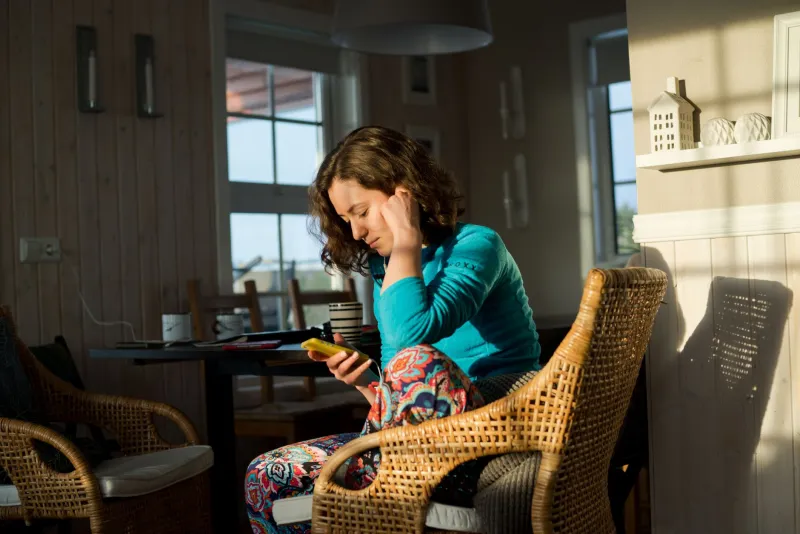
Let's say it's a Wednesday. You're eating lunch at your desk, or on your couch, or in your car in a parking lot. Nothing remarkable is happening. You pick up your phone, and within thirty seconds you've watched someone zip-lining in Costa Rica, toured a newly renovated Brooklyn apartment that looks like a magazine spread, and seen a couple announce their engagement on a boat somewhere with improbably good lighting.
You put the phone down. You look at your sandwich. And somewhere in the back of your head, a small, mean voice goes: really?
This is the particular misery of living an ordinary life in the age of extraordinary content. Not dramatic suffering — just a low, persistent hum of feeling like your existence is somehow less vivid than everyone else's. Like you missed a memo about how life is supposed to look.
Here's the thing, though: the problem isn't your life. Your life is fine. The problem is the channel you keep switching to.
The Illusion of the Extraordinary Ordinary
Social media has done something genuinely strange to our sense of what a normal life looks like. The platform rewards visual drama, emotional peaks, and novelty — which means the content that rises to the top is almost never representative of how most people actually spend most of their time.
Nobody posts the Tuesday. Nobody films the hour they spent trying to get a billing error corrected on the phone, or the twenty minutes staring at the ceiling before getting up, or the dinner that was fine, just fine, nothing special. That stuff makes up the vast majority of any given life — including the lives of the people whose content makes yours feel small.
What you're comparing your full, unedited life to is someone else's greatest hits reel. It's not a fair fight. It was never meant to be.
The Real Cost of Resenting Your Reality
The problem with chronic life-envy isn't just that it feels bad — it's what it does to your attention. When you're constantly measuring your existence against a curated highlight reel, you stop being present in your actual life. You move through your days as a critic rather than a participant, noting everything that falls short instead of noticing what's actually there.
This is a genuine loss. Not a dramatic one — nobody's going to make a documentary about it. But the cumulative effect of spending years slightly checked out of your own existence, waiting for it to get interesting enough to pay attention to, is significant. You miss things. Small things, mostly, but small things are most of what a life is made of.
The ordinary Tuesday you're trying to scroll away from? That's your life. Not a placeholder for it.
How to Rebuild Curiosity in Your Own Existence
This isn't about toxic positivity or pretending everything is wonderful. It's about recalibrating your attention so you're actually looking at what's in front of you instead of through it.
Change your definition of interesting. We've been trained to equate interesting with visually dramatic, shareable, or story-worthy. But interesting is also: a conversation that went somewhere unexpected, a piece of music you forgot you loved, the specific quality of light at 4pm in October, the way your neighborhood smells after rain. None of that photographs well. All of it is real.
Get curious about the mechanics of your own days. One of the quietest forms of boredom is being on autopilot — moving through routines so familiar you've stopped noticing them. The antidote isn't disruption, it's attention. What do you actually enjoy about your morning? What part of your work, however unglamorous, are you genuinely good at? What do you notice when you walk the same route you always walk but actually look around?
Limit the comparison inputs. This isn't a radical digital detox prescription — just an honest acknowledgment that you cannot feel good about your life while spending hours a day watching content specifically designed to make you feel like you're missing out. You don't have to delete everything. But being intentional about how much you consume, and what you consume, matters more than most people admit.
Stop waiting for your life to become a good story. There's a version of future-orientation that's healthy — planning, goal-setting, looking forward. And then there's the version where you're perpetually in a waiting room, putting the real investment of your attention on hold until something worth paying attention to arrives. That arrival never comes, because the present always eventually becomes the past, and the past always looks smaller than it was when you were living inside it.
The Quiet Argument for Ordinary Life
Here's something that rarely gets said in wellness content, because it doesn't sell anything: the ordinary life is often the healthiest one. Stability, routine, low-drama connection, enough predictability to feel safe — these are not the enemies of a good life. They're frequently the foundation of one.
The people posting the extraordinary content are not, on average, happier. Research on hedonic adaptation suggests that peak experiences — travel, major purchases, big life events — provide a much shorter happiness boost than we expect. The things that actually correlate with sustained wellbeing are quieter: meaningful relationships, a sense of purpose, feeling connected to your community, having enough.
None of that looks particularly good in a post. All of it can be yours on a Wednesday, eating lunch, if you're paying attention.
Your life isn't the problem. Your attention is just pointed in the wrong direction. Redirect it, even slightly, and you might be surprised what you find.