You Traded Fast Fashion for Slow Fashion — So Why Do You Still Feel Empty?
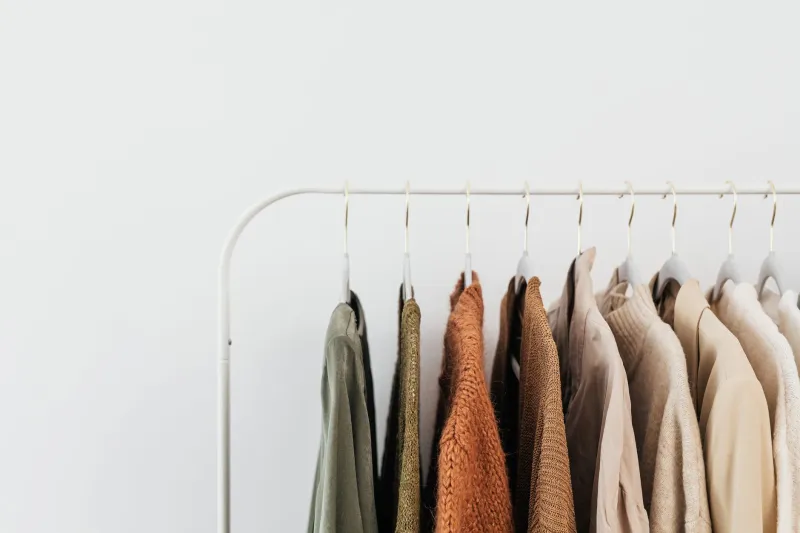
You did everything right. You deleted the Shein app. You watched the documentaries. You started reading the labels, researching the brands, calculating cost-per-wear on a spreadsheet like a responsible adult who has genuinely figured something out. Your closet got smaller and more expensive. Your Instagram captions got more thoughtful. And yet — standing in front of a wardrobe full of considered, capsule-approved, ethically-sourced pieces — you still feel like you have nothing to wear.
Not nothing literally. Nothing that feels like you.
Welcome to the slow fashion spiral. It's quieter than the Zara-haul version, and it costs a lot more per unit, but it's still a spiral.
The Marketing Swap Nobody Warned You About
Fast fashion sold you a feeling. Buy this, feel trendy, feel seen, feel like the version of yourself you're trying to become. It was obvious. It was almost embarrassing how obvious it was.
Slow fashion sold you a different feeling — one that was harder to argue with. Buy this, feel aligned. Feel ethical. Feel intentional. Feel like the kind of person who thinks before she acts, who values craft over convenience, who is, frankly, better at being a human than she used to be.
The product changed. The emotional hook didn't.
And because the slow fashion pitch wraps consumption in the language of values — sustainability, fair wages, environmental responsibility — it gets a free pass that a $12 Forever 21 top never would. Spending $300 on a single white button-down from a small-batch Portuguese atelier doesn't feel like shopping. It feels like a stance. Which makes it almost impossible to question.
When 'Intentional' Becomes Its Own Obsession
There's a particular kind of stress that lives in the slow fashion rabbit hole, and it goes something like this: you find a brand you love, then you find a thread on Reddit explaining why that brand isn't actually ethical. So you find another brand. You spend three hours on Good On You. You cross-reference fiber content. You try to figure out whether Tencel is actually better than organic cotton for your specific climate and lifestyle. You add something to your cart, then remove it because you're not sure you need it or just want it, and you've read enough about mindful consumption to know those are supposed to be different things.
By the time you finally buy something, you're exhausted. And vaguely resentful of the sweater.
This is consumption anxiety in a cashmere coating. The bar for 'good enough' has gotten so high — ethically made, sustainably sourced, classically styled, genuinely versatile, not manufactured by a brand that had one bad press cycle in 2019 — that almost nothing clears it. And when something finally does, the relief is so short-lived that you're already scanning for the next gap in your wardrobe before the package arrives.
The Confidence Promise Was Always a Lie
Here's the thing nobody in the slow fashion content ecosystem is going to tell you: clothes have never been able to deliver what we're actually asking them to deliver.
Not the cheap ones. Not the expensive ones. Not the ethically-made ones.
When you buy a $250 pair of wide-leg trousers because you've decided they're a 'forever piece,' you're not just buying trousers. You're buying a story about who you'll be when you wear them — more put-together, more confident, more like the woman in the brand's lookbook who appears to have her life effortlessly sorted. And when the trousers arrive and you put them on and you still feel like yourself (complicated, uncertain, mid-Tuesday), the gap between the story and the reality is its own kind of disappointment.
This is true whether the trousers cost $25 or $250. The price point changes the guilt level. It doesn't change the dynamic.
What Self-Knowledge Actually Looks Like in a Closet
Building a wardrobe that genuinely works for you — one that doesn't require constant re-evaluation, doesn't make you feel guilty for buying it or guilty for not loving it enough — has almost nothing to do with ethics ratings or cost-per-wear calculations. It has everything to do with knowing yourself.
And most of us, if we're honest, skip that part.
We know our aesthetic preferences in theory. We have Pinterest boards and saved Instagram posts. But do we know what we actually reach for on a Tuesday morning when we're running late? Do we know which textures make us feel itchy and irritable by noon? Do we know whether we're buying something because we love it or because we love the idea of being the kind of person who loves it?
Those are different questions, and they require a different kind of research than scrolling a brand's sustainability page.
A few things that actually help:
Wear what you own before you buy anything new. Not as a rule, but as data collection. What do you keep reaching for? What hangs there making you feel vaguely bad every time you look at it? The pattern tells you more about your actual taste than any style quiz.
Notice the feeling before the purchase, not after. If you're buying something to solve a feeling — boredom, restlessness, the vague sense that your wardrobe doesn't represent who you are right now — the purchase won't solve it. Sit with the feeling first. See what it's actually about.
Let go of the righteousness. A piece of clothing doesn't make you a good person. A piece of clothing doesn't make you a bad one. Buying an ethically-made top while secretly feeling miserable about your wardrobe is not a moral victory. Buying a secondhand piece from ThredUp because you genuinely love it and it fits your life is probably closer to the spirit of the whole thing than agonizing over whether a $400 coat is 'worth it.'
Give yourself permission to have a taste, not a philosophy. You're allowed to like what you like. You're allowed to buy something because it makes you feel good, full stop, without it needing to represent your entire value system.
The Wardrobe Isn't the Problem
The slow fashion movement got some genuinely important things right. Fast fashion's environmental and human cost is real, and buying less is, broadly speaking, better than buying more. None of that is wrong.
But somewhere along the way, 'buy better' became another optimization project — another area of life where you could be doing it more correctly, more consciously, with more research and more restraint and more alignment. And that's exhausting in a way that has nothing to do with fashion and everything to do with the modern compulsion to turn every choice into a performance of self-improvement.
Your wardrobe is not a vision board. It's not a values statement. It's not a project. It's just clothes — and the sooner you make peace with that, the sooner getting dressed in the morning might actually feel like something other than a test you keep almost passing.
The goal was never a perfect closet. The goal was a life you feel at home in. Start there.