More Products, More Problems: The Truth About What Your 10-Step Routine Is Actually Doing to Your Skin
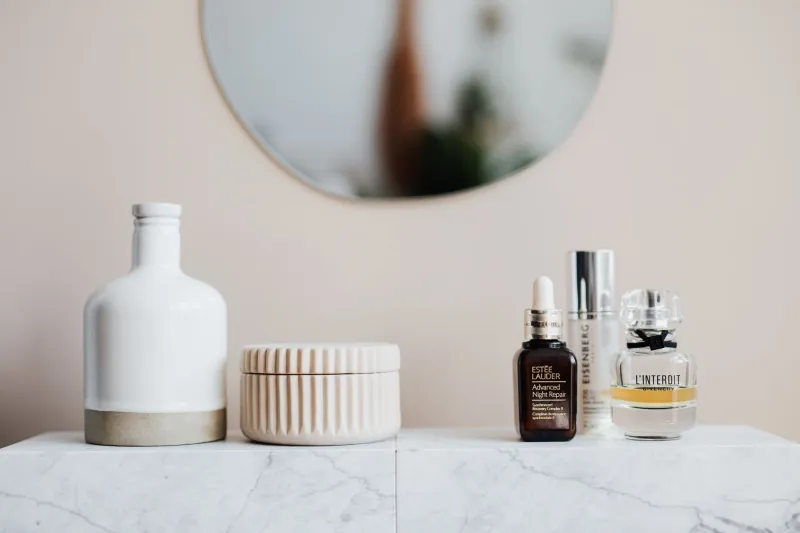
Open any beauty influencer's cabinet and you'll find an entire pharmacy's worth of product. Toners, essences, exfoliating acids, vitamin C serums, retinols, peptide creams, SPFs, facial oils — each one promising to solve a problem the last one apparently couldn't. The routine has become a ritual. The ritual has become an identity. And somewhere along the way, skincare stopped being about taking care of your face and started being about performing the idea of taking care of your face.
Here's what nobody in a sponsored post is going to tell you: for a lot of people, all of that effort is actively making things worse.
The Science of Skin Overload
Your skin barrier — technically called the stratum corneum — is the outermost layer of your skin, and its entire job is to keep moisture in and irritants out. It's actually pretty good at that job. It's been doing it for your entire life without a single niacinamide serum.
The problem is that many of the active ingredients we've been conditioned to treat as essential — AHAs, BHAs, retinoids, vitamin C — are, by design, disruptive. They work by causing controlled stress to the skin. A little of that stress, applied correctly, can stimulate collagen production or speed up cell turnover. But layer multiple actives on top of each other, apply them daily, and you're not giving your skin time to recover. You're just stressing it out continuously.
Dermatologists have a term for what happens next: barrier dysfunction. The skin becomes red, flaky, tight, and paradoxically more prone to breakouts — all symptoms that look exactly like the problems people are trying to fix. So they add more products. And the cycle continues.
Dr. Ranella Hirsch, a Boston-based dermatologist who has spoken publicly about the over-complication of skincare, has described this phenomenon as "cosmetic dermatitis" — skin that isn't actually diseased but has been so thoroughly over-treated that it behaves like it is. It's more common than you'd think, and it's almost entirely self-inflicted.
How We Got Here
Before you feel too bad about your overflowing shelf, understand that you were sold into this. The K-beauty wave of the early 2010s introduced American consumers to the concept of multi-step routines, and the beauty industry — which profits enormously from complexity — ran with it. Suddenly, a cleanser and a moisturizer weren't enough. You needed a double cleanse, a toner to restore pH, an essence to prep absorption, a serum to treat, a second serum to boost, a moisturizer to lock it in, and an oil to seal the deal.
Each new product category created a new anxiety. If you weren't using an essence, were you even absorbing your serum properly? If you skipped the toner, was your pH off? The industry didn't just sell products — it sold the fear of not using them.
Social media amplified everything. "Shelfies" became a cultural currency. Haul videos rewarded accumulation. The message, repeated endlessly in aesthetically lit flat lays, was that caring for yourself meant investing in yourself — and investment was measured in product count.
The Emotional Tax Nobody Talks About
Beyond the physical toll, there's a quieter cost: the anxiety of maintenance. When your routine has ten steps, each one carries a tiny weight of obligation. Miss your vitamin C and you've failed. Fall asleep without double-cleansing and you've damaged your skin. Skip retinol for a week and you've lost ground.
This is not wellness. This is a performance with an invisible audience — and you're the harshest critic in the room.
Research on decision fatigue shows that the more choices we have to make, the more mentally draining those choices become — even small ones. A complicated skincare routine isn't just expensive; it's cognitively exhausting. And when self-care becomes a source of stress, the whole point of it collapses.
There's also something worth examining about why elaborate routines feel so satisfying in the first place. Psychologists who study health behaviors have noted that complex rituals give us a sense of control — particularly over things we fear, like aging. The 10-step routine isn't just about skin. It's about the illusion that if we do enough, we can stop time. That if we optimize hard enough, we can outrun our own mortality. That's a lot of pressure to put on a $68 serum.
What Actually Works (It's Boring, Sorry)
Here's the unsexy truth: the dermatological consensus on effective skincare is remarkably simple. Cleanse gently. Moisturize. Wear SPF every single day. If you want to add actives, pick one or two, introduce them slowly, and give your skin time to adjust.
That's it. That's the routine that the research actually supports.
Sunscreen, in particular, is the single most evidence-backed anti-aging intervention available without a prescription. More than any serum, more than any acid, more than any overnight mask. Yet it's the step most people skip because it's not exciting. It doesn't come in beautiful packaging. It doesn't have a 47-ingredient INCI list to decode.
The products that genuinely move the needle — prescription retinoids, broad-spectrum SPF, a gentle cleanser, basic hydration — aren't the ones getting millions of views on TikTok. They're boring. And boring doesn't sell.
The Permission You Didn't Know You Needed
If your skin is irritated, reactive, or just... tired, and you've been adding products trying to fix it, consider doing the opposite. Strip back. Give your skin a break. A so-called "skin fast" — a week or two of nothing but gentle cleanser and moisturizer — can reveal a lot about what your skin actually needs versus what the algorithm told you it did.
And if you love your 10-step routine? If it genuinely brings you joy and your skin is thriving? Keep it. This isn't about shame. It's about honesty — with yourself and about an industry that profits from making you feel like you're always one product away from your best skin.
The most radical thing you can do in a market built on manufactured insecurity is decide that what you have is enough. Your skin has been keeping you alive and intact for your entire life. Maybe it deserves a little more credit — and a little less interference.